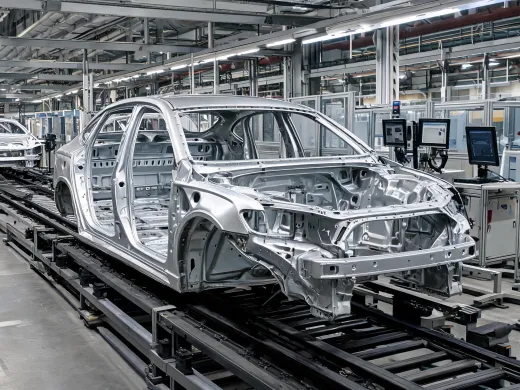
Automotive & Transport
Aluminum supports light weighting, crash structures, battery enclosures and thermal assemblies while copper enables vehicle electrification.
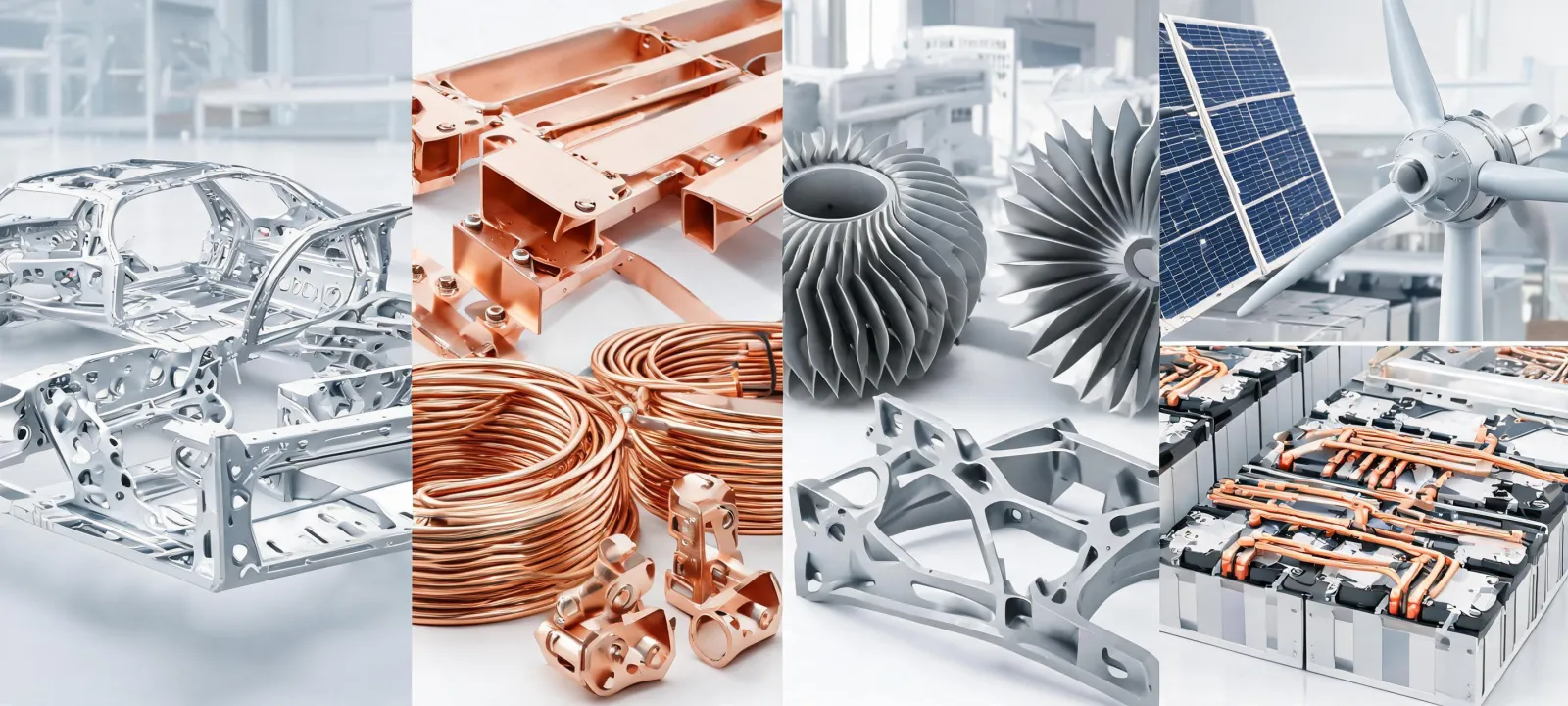
Industries
Industrial markets using aluminum, titanium and copper to lower weight, move power and hold performance in demanding environments.
Rio Tinto materials serve buyers who need to make specification choices across cost, performance, carbon reporting and delivery risk. The industry view helps translate a material family into real operating requirements.
Automotive teams often start with mass reduction, thermal pathways and electrical architecture. Energy and grid teams usually focus on conductivity, route reliability and large-scale scheduling. Aerospace and process-equipment buyers may bring stricter demands around corrosion, fatigue and documentation. By separating these contexts, Rio Tinto can keep the material conversation tied to the way each industry actually qualifies, purchases and deploys metals.
Aluminum supports light weighting, crash structures, battery enclosures and thermal assemblies while copper enables vehicle electrification.
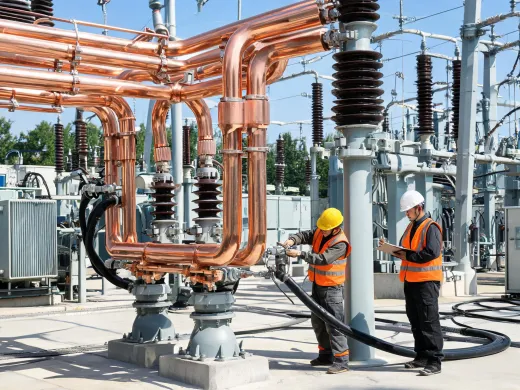
Copper and aluminum are essential to generation, transmission, distribution equipment and the expanding electrical backbone.
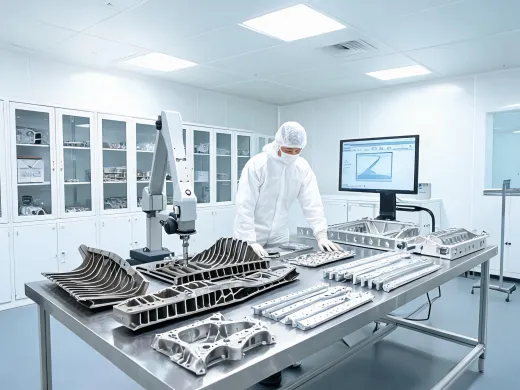
Titanium and aluminum help engineering teams manage weight, corrosion, fatigue and documentation needs across high-value assemblies.

Aluminum systems and copper conductors help projects balance durability, installation efficiency and long-term operational demands.

High-density digital infrastructure depends on conductive materials, thermal planning and supply visibility for repeatable builds.
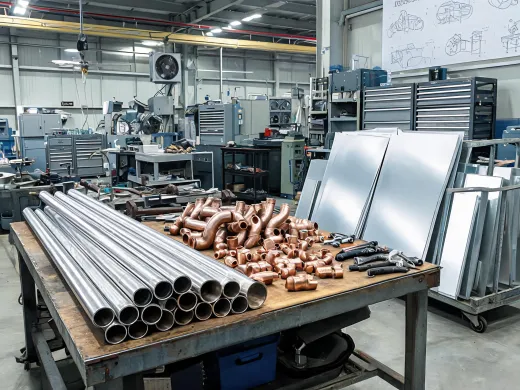
Corrosion, temperature and service environment guide the conversation around titanium, copper alloys and aluminum forms.
These numbers are a planning framework, not a catalogue shortcut. They remind buyers that a single material family can behave very differently once it enters a vehicle platform, a grid project, a flight-critical assembly or a data center build. The goal is to bring those operating realities into the first discussion.
Map the Application